
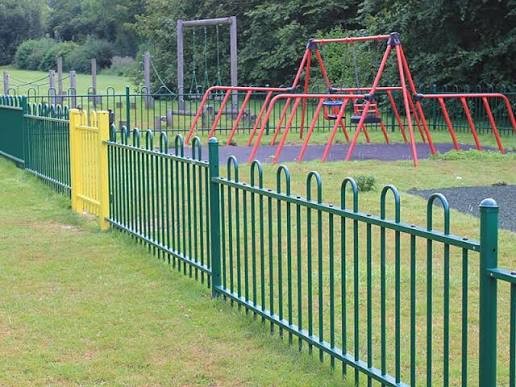
Ask a parent what makes a playground safe and they will point at the equipment — the slide height, the soft surfacing, the swing clearances. Ask a school facility manager the same question and the answer often starts further out: at the fence. The fence line is what turns an open piece of ground into a supervised space. It decides whether a wandering kindergartener can reach the street, whether a stray dog can reach the sandbox, and whether staff can account for every child with one sweep of the eyes. For anyone studying school facility planning or playground safety, fencing deserves the same serious attention as the play structures inside it.
What a School Fence Actually Has to Do
A residential fence mostly marks a boundary. A school fence has four jobs at once:
1. **Containment.** Young children are fast, curious and poor judges of traffic. The fence must keep them in — which means adequate height, no footholds that turn the fence into a climbing wall, and gates that latch reliably every single time.
2. **Exclusion.** The fence keeps out what does not belong: unleashed dogs, wildlife, shortcut-taking pedestrians and, at night, vandals.
3. **Visibility.** Unlike a privacy fence at a home, a schoolyard fence usually must be see-through. Supervision depends on sightlines — staff inside should see out, and passersby and patrols outside should see in. A fence that hides the yard can make it less safe, not more.
4. **Access control.** Openings are the weak points, so school fencing is planned together with its gates: a main gate that can be secured, service access for maintenance, and emergency egress that never traps children inside.
Playground fence requirements in most jurisdictions are built around these four jobs, typically specifying minimum heights, maximum openings (so a child’s head cannot become trapped), and self-closing, self-latching gates for early-years areas.
Material Choices, Judged by a School Calendar
Facility managers evaluate fence materials against a distinctly unglamorous criterion: what will this cost to maintain, in staff hours, across twenty summers?
– **Chain link** is economical and see-through, but it is climbable, can develop sharp edges as it ages, and does little for noise or appearance.
– **Wood** offers privacy where a yard borders homes, but it rots, warps, invites splinters and graffiti, and needs regular treatment — an awkward fit beside play areas.
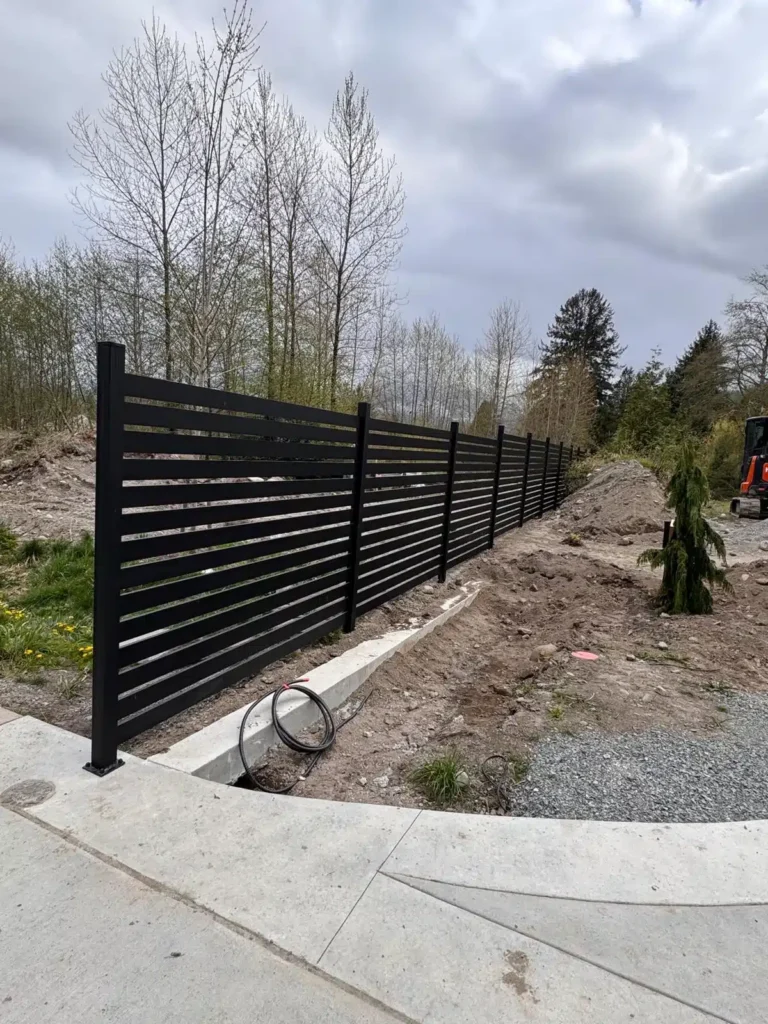
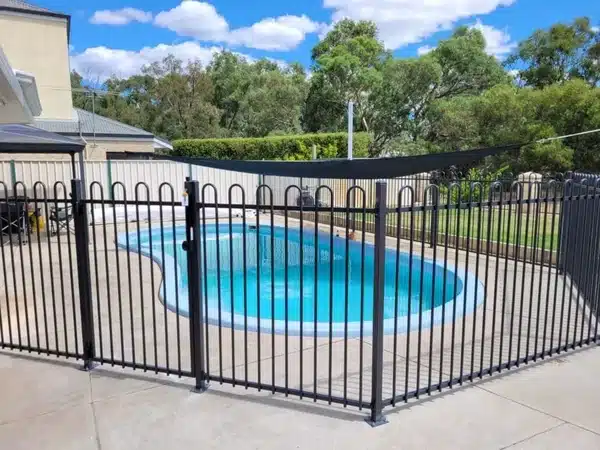
– **Ornamental steel and aluminum** have become the institutional standard for good reasons: vertical pickets are hard to climb, panels are rigid and difficult to damage, and powder-coated aluminum in particular never rusts and never needs painting. Its higher upfront cost is weighed against a near-zero maintenance schedule, which is why specifiers increasingly treat it the way homeowners treat a quality aluminum fence installation — a one-time build instead of a recurring chore.
Whichever material is chosen, the details matter as much as the product: posts set deep enough to resist years of leaning and climbing, no sharp finials at child height inside the yard, and bottom rails or tensioning that leave no gap a small child — or a determined dog — can squeeze under.
The Gate Is Part of the Fence
More schoolyard incidents trace back to gates than to fence panels. A gate that drags, fails to latch or is routinely propped open defeats the entire perimeter. Good practice is boring and effective: self-closing hinges on playground gates, latches placed out of small children’s reach, a termly walk-the-line inspection that checks every latch, post and panel, and a rule that a broken gate is a same-week repair, not a next-year one.
Planning the Line: Age Zones, Corners and Sight Triangles
Experienced school planners add one more layer before choosing products: zoning. The fence line should reflect how the yard is actually used. Early-years play areas for the youngest students usually sit closest to the building, with the strictest containment — full-height fencing, self-latching gates and no shared openings with delivery routes. Older students’ courts and fields can open more, but their gates should still never discharge directly into a parking lot or across a bus loop.
Geometry matters too. Corners deserve a second look on the drawings: a fence corner beside a hedge or a utility box can quietly become a climbing route over the top, undoing the specified height in the one spot nobody measured. Gates deserve the same scrutiny — placed where staff naturally stand during recess, visible from the building, and never hidden behind plantings that seemed harmless in the landscape plan. And every opening should answer a simple question: who is this for, and who latches it? A fence audit that walks the full perimeter each term — testing latches, sighting down lines for lean or damage, checking the ground line for new gaps after frost and landscaping — catches in an hour what a product catalogue never will.
A Fence Is a Safety System, Not a Product
The lesson for future facility managers and designers is to spec school fencing the way you would spec any safety system: start from the jobs it must do — contain, exclude, reveal, control — then choose materials and hardware that keep doing those jobs with minimal attention for decades. It is the standard that experienced local teams — including Lions Gate Railings on school and residential projects across the Vancouver area — are hired to meet every day. The children inside will never notice the fence at all. That invisibility is the surest sign it is working.